
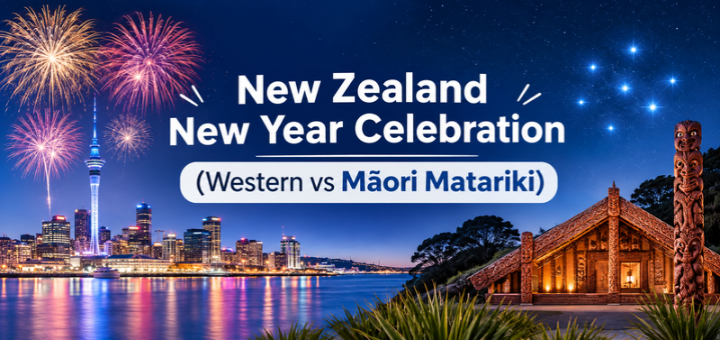
New Zealand has a unique relationship with the New Year, blending spectacular summer celebrations with centuries-old Māori traditions. From fireworks lighting up city skylines to cultural gatherings under the stars, the country offers two very different ways to welcome a new beginning.
New Zealand marks the Western New Year on 31 December in peak summer, and Matariki, the Māori New Year, in mid-winter, with a public holiday on Friday 25 June 2027. Indian visitors need a visitor visa and should carry NZD on a forex card.
This guide covers how the two new years differ, where to celebrate each one, what a trip costs, the visa and levy rules for Indian visitors, and the smartest way to carry New Zealand dollars.
Two New Years, Two Calendars
The Western New Year follows the Gregorian calendar, so it always lands on 1 January. Because New Zealand sits close to the International Date Line, it is one of the first countries to see the new year arrive, hours before India.
Matariki follows the maramataka, the Māori lunar calendar. Its date moves every year, and it falls in June or July. The two celebrations could hardly feel more different: one is loud, outdoor and summery, while the other is reflective, family centred and wrapped in winter coats.
The Western New Year: Summer, Fireworks and Festivals
December is the start of the Kiwi summer, with long evenings, warm days and school holidays. Hotels in popular towns fill weeks in advance.
1. Auckland’s Sky Tower Countdown
The biggest show in the country is the midnight fireworks display launched from the Sky Tower. Watching it is free. The Viaduct Harbour, the waterfront at Wynyard Quarter and Mount Victoria in Devonport are popular viewing spots, so arrive early and expect crowds.
2. Gisborne and Rhythm and Vines
Gisborne, on the east coast, is the first city in the world to see the new year’s sunrise. It is also home to Rhythm and Vines, the country’s best-known New Year festival. The 2026 edition runs from 29 to 31 December at Waiohika Estate, with campsites opening on the 28th. It’s also the final Rhythm and Vines in Gisborne, because the festival moves in 2027 to a new site organisers haven’t named yet.
3. Wellington and Queenstown
Wellington hosts free waterfront concerts, while Queenstown counts down beside Lake Wakatipu with mountains all around.

Matariki: The Māori New Year
Matariki is the Māori name for the star cluster known elsewhere as the Pleiades. When it rises before dawn in mid-winter, it marks the start of the Māori year. Traditionally, it was a time to remember those who had died, celebrate the harvest and plan for the year ahead.
Matariki became a national public holiday in 2022, the first in New Zealand to recognise te ao Māori. The holiday always falls on a Friday, so it creates a long weekend. In 2026 it fell on 10 July, and in 2027 it falls on Friday 25 June.
1. How Matariki Is Celebrated
The day begins before sunrise with dawn gatherings to see the stars rise. Communities light fires, share food, tell stories and remember the dead. Across the country, councils, museums and marae host light shows, kapa haka performances, markets and talks. Te Papa in Wellington and the Auckland waterfront usually run some of the larger programmes.
2. Why It Suits Indian Travellers
Matariki falls during the ski season, so Queenstown and Ruapehu are already busy. It is a quieter, cheaper time to see the country than the summer peak, and it offers a cultural experience that most tourists miss.
Western New Year vs Matariki at a Glance
| Rank | Western New Year | Matariki |
|---|---|---|
| Date | 31 December to 1 January | Moves each year; Friday 25 June 2027 |
| Season | Summer | Winter |
| Mood | Fireworks, festivals, beaches | Dawn gatherings, remembrance, feasting |
| Best places | Auckland, Gisborne, Queenstown | Wellington, Auckland, local marae |
| Crowds and prices | Peak | Moderate |
What a Trip Costs
New Zealand is not a budget destination. A café lunch costs around NZD 25 to 35, and dinner at a mid-range restaurant is often NZD 50 or more per person. A day of sightseeing with transport and food usually works out to NZD 150 to 250 per person before accommodation.
Hotels around New Year cost far more than in June. In Auckland, you can tap a contactless bank card or phone on buses, trains and ferries, paying the standard adult fare with a NZD 20 daily cap. Buses no longer accept cash payments, and intercity coaches connect the country’s main towns.
Visa Requirements for Indian Visitors
Indian passport holders need a New Zealand Visitor Visa. India is not a visa waiver country, so the NZeTA is not an option. The application costs NZD 341, plus the NZD 100 International Visitor Conservation and Tourism Levy, for a total of NZD 441. You apply fully online, uploading your passport pages and a photo, so there is no visa centre visit.
Expect to show proof of funds, which means at least NZD 1,000 for each month of your stay, plus a return ticket and your travel plans. Right now, Immigration New Zealand decides 80 percent of visitor visa applications within two weeks, although summer is its busiest period. So if you’re planning to be there for New Year, apply as soon as your travel dates are confirmed.
Before you land, complete the free New Zealand Traveller Declaration online or in the NZTD app. Declare any food you carry, including packed snacks and spices, because undeclared items can get you an instant NZD 400 fine, even for an honest mistake.

The Currency Question: How to Carry New Zealand Dollars
The New Zealand dollar moved between about ₹51 and ₹54 in October and November 2026, and the way you convert decides how much of your budget you lose along the way.
1. Indian Credit and Debit Cards
Swiping an Indian card in New Zealand adds a forex markup of about 2 to 3.5 percent, plus 18 percent GST on that markup. Over a two-week trip, that quietly adds up, and ATM withdrawals cost even more.
2. Cash From Airport Counters
Airport counters offer some of the worst rates, because arriving travellers have no alternative.
3. A Forex Card Loaded With NZD
A forex card loaded with New Zealand dollars locks the rate on the day you load it and removes the markup on each swipe. The BookMyForex multi-currency forex card holds NZD with zero issuance, reload or annual fees. Load the correct wallet before you fly, because spending in a currency not loaded on the card attracts a cross-currency fee of 3.5 percent plus GST.
FEMA Rules Every Traveller Should Know
Your trip falls under the Liberalised Remittance Scheme, which allows USD 250,000 per person per financial year. You can carry foreign currency notes up to USD 3,000 per visit, with the rest on a forex card.
TCS applies above ₹10 lakh of LRS spending in a financial year, and the rate then depends on the purpose. An overseas tour package is the exception, taxed at 2 percent from the first rupee.
Where to Check the Real Cost
The BookMyForex NZD to INR converter shows the live interbank rate through the day. Compare it with your bank’s quote before you load. Pick your new year, apply for the visa early and load dollars at a fair rate, and the only thing left to plan is where to watch the sky.


