


Every four years, athletes from across the Commonwealth of Nations gather for one of the world’s great multi-sport events, and in 2026 that stage is Glasgow. For Indian fans, the Commonwealth Games are a rare chance to watch their country compete for medals in person, and with India set to host the next edition, interest has never been higher. But Scotland is a pounds-and-visa trip, and the money side decides how much of the experience your budget can actually cover.
The 2026 Commonwealth Games are in Glasgow, Scotland, from 23 July to 2 August, with a compact 10-sport programme across four venues. Indian fans need a UK Standard Visitor visa (£135 plus a VFS Global service charge), and should carry GBP on a forex card loaded with pounds.
This guide covers the Games’ history, the key facts for 2026, how Indian fans plan the trip, the UK visa and currency rules, and the smartest way to carry pounds so more of your budget reaches the stands.
A Short History of the Commonwealth Games
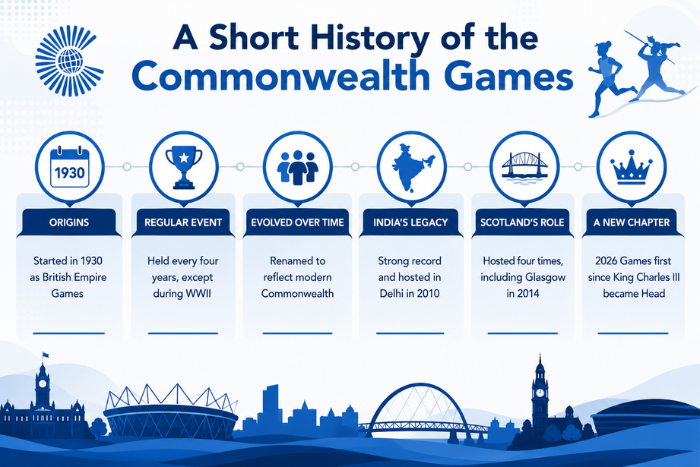
The Commonwealth Games began in 1930 as the British Empire Games in Hamilton, Canada, and have been held every four years since, apart from a break during the Second World War. The event has evolved with its members, renamed over the decades to reflect a modern Commonwealth of independent nations.
India has a long and successful history at the Games, and hosted the 2010 edition in Delhi. Scotland has hosted four times, including Glasgow in 2014, and the 2026 Games mark the first edition since the accession of King Charles III as Head of the Commonwealth.
The Key Facts for Commonwealth Games 2026
The 2026 Games run from 23 July to 2 August in Glasgow, Scotland’s largest city. This is a deliberately compact, streamlined edition: 10 sports, including six fully integrated Para sports, staged across just four venues within an eight-mile corridor, welcoming around 3,000 athletes from 74 nations and territories.
The venues are Scotstoun Stadium for athletics, Tollcross International Swimming Centre for swimming, the Glasgow International Arena (formerly the Emirates Arena) for artistic gymnastics, with track cycling at the adjacent Sir Chris Hoy Velodrome, and the Scottish Event Campus.
Further, there is The Hydro for netball, the SEC Armadillo for weightlifting, and the SEC Centre for basketball, bowls, boxing and judo. Keeping everything close together makes it realistic for a visitor to catch multiple sports in a single day.
Why This Edition Matters for Indian Fans
Beyond the medals, 2026 carries a milestone for India: the closing ceremony includes the formal handover to Ahmedabad, which will host the 2030 Commonwealth Centenary Games. For Indian fans, Glasgow is both a chance to cheer the current team and a preview of the home Games to come.
India traditionally performs strongly in weightlifting and boxing, both of which are on the Glasgow programme, so there are real medal prospects to plan a viewing schedule around. That said, this is a significantly reduced programme compared to Birmingham 2022, with wrestling, badminton, table tennis, hockey and shooting all absent, which means fewer medal opportunities overall.
Shooting has been absent since Gold Coast 2018 which cost us a lot of medals in the previous games too!
How Indian Fans Should Plan their Trip to Commonwealth Games 2026
Glasgow is well connected by air, most conveniently via a London hub with a domestic hop, or through other European gateways. The city centre is the most convenient base for the venues, with the West End and Finnieston offering a livelier feel close to the Scottish Event Campus.
Transport will be busier than usual during the Games, so allowing extra time for trains, buses, and taxis is wise. Tickets are sold through the official Glasgow 2026 channels in session-based categories, and popular finals sessions go fastest, so booking early and around specific sports beats hoping for walk-up availability.
Visa Requirements for Indian Visitors
Indian passport holders need a UK Standard Visitor visa to attend the Games. Indians are not eligible for the UK ETA, so a full visa is the only route. Following the April 2026 fee revision, the six-month visa costs £135, plus a VFS Global service charge, and standard processing takes about three weeks, so applying six to eight weeks before travel is sensible.
Since 25 February 2026 the UK issues a digital eVisa rather than a passport sticker, accessed through a UKVI online account. The application asks for proof of funds, and a clean, documented forex load through a regulated dealer strengthens that funds trail rather than complicating it.
The Currency Question: How to Carry Pounds
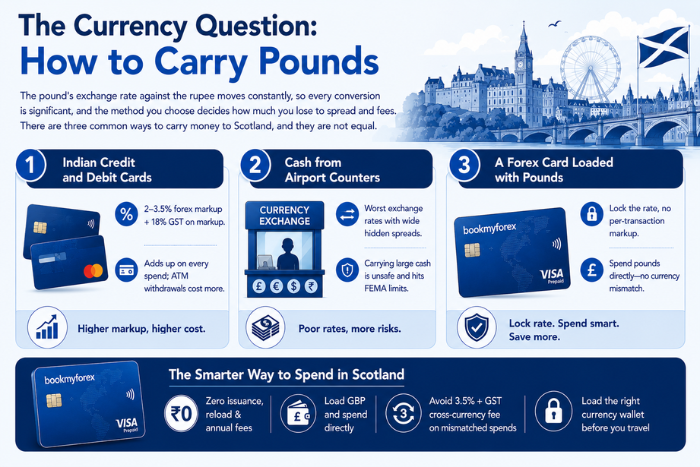
The pound’s exchange rate against the rupee moves constantly, so every conversion is significant, and the method you choose decides how much you lose to spread and fees. There are three common ways to carry money to Scotland, and they are not equal.
1. Indian Credit and Debit Cards
Swiping an Indian credit card in Glasgow converts INR to GBP at the network rate, then adds a forex markup typically in the range of 2 to 3.5 percent plus 18% GST on that markup. Across tickets, food, and travel over a week, that quietly adds up, with ATM withdrawals charged even harder.
2. Cash from Airport Counters
Buying pounds at the airport is the worst rate on offer, because counters build a wide spread into the rate precisely because arriving travellers have no alternative. Carrying large cash also runs against sensible safety and FEMA limits.
3. A Forex Card Loaded with Pounds
A forex card loaded with GBP before departure locks the rate at loading and removes the per-transaction markup entirely. You spend pounds directly from a pound wallet, so there is no currency mismatch on a match ticket or a Glasgow dinner.
The BookMyForex multi-currency forex card lets you load GBP and spend directly in pounds with zero issuance, reload, or annual fees. Loading the correct currency wallet before travel is the key to avoiding cross-currency fees, which run at 3.5% plus GST when spending in a currency not loaded on the card.
FEMA Rules Every Traveller Should Know
Foreign travel falls under the Liberalised Remittance Scheme, capping spend at USD 250,000 per financial year, far above any Games trip. You can carry foreign currency notes up to USD 3,000 or equivalent per visit, with the rest on a forex card.
A customs declaration is required if foreign currency notes alone exceed USD 5,000, or if total foreign exchange (including notes and traveller’s cheques) exceeds USD 10,000. A forex card load is a documented, FEMA-compliant transaction.
Where to Check the Real Cost
Airport and card rates are rarely shown against the live interbank benchmark, which is where the loss hides. The BookMyForex GBP to INR currency converter shows the interbank pound rate in real time. Loading GBP on the multi-currency card and spending in pounds means each transaction draws from the GBP wallet directly, with no cross-currency fee on GBP purchases. Check the schedule of charges on the BookMyForex website for full details by card variant.
Compare that against the pound rate your credit card or airport counter quietly applies. It is the fastest way to see what a Commonwealth Games trip really costs once conversion is stripped out. Sort the visa early, book sessions around India’s medal hopes, load pounds smart, and Glasgow delivers without the budget leaking away.
About the Author

Kshitij Pandey is the Content Manager at BookMyForex with over 7 years of experience in content marketing, blogging, and social media strategy. He has worked extensively on building engaging campaigns and informative resources that help users understand forex, international money transfers, and travel-related financial services.


