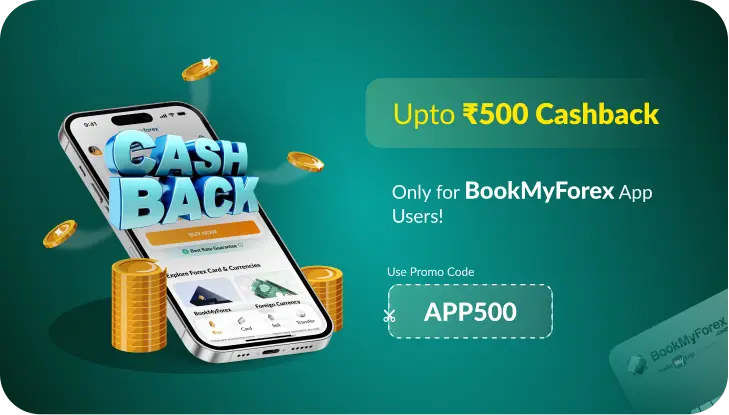






Sending Money Abroad for Studies? Earn Up to ₹15,000 Cashback!
Use promo code 'REMITSPL' while paying tuition fees, GIC, accommodation, and living expenses abroad, and get cashback on every education transfer at India's best guaranteed rates. Applicable for both new and existing customers.
Offer applicable on outward education remittances: tuition, GIC, accommodation, living expenses, exam fees (IELTS/TOEFL/GRE/GMAT), visa fees, overseas health insurance, and enrollment/registration fees. Applicable for both new and existing customers. A minimum transfer value of ₹3,00,000 is required to qualify. Available only for new users; the promo code can be used only once per user. The promo code must be applied online while ordering - if the order is placed without the promo code, no cashback request will be entertained. No other cashback/discount offer can be clubbed with this offer. Cashback ranges from ₹450 to ₹15,000 depending on the transfer slab. Cashback for bookings done till 15th September 2026, will be credited in respective bank account which is used for making successful payment on BookMyForex platform. Cashback for bookings done from 16th September 2026 onwards, will be credited as MyCash in your MakeMyTrip account. MyCash can be used completely on booking flights, hotels and holidays on MakeMyTrip. In case of buses and cabs, minimum booking amount should be Rs. 500 to be able to use MyCash completely. Visit the MakeMyTrip app or website and log in with the email or mobile number used for making this booking to access the MyCash. Check your MyCash balance and detailed terms at https://www.makemytrip.com/myWallet/ Cashback is credited only to the customer who placed the order. If the order is cancelled, the customer is not eligible for cashback. Offer valid till 30th September 2026. For complete T&C details, visit: https://www.bookmyforex.com/money-transfer-student-offer-remit-spl/